Insights from Pivot Point Consulting
Industry updates, client success stories, and expert perspectives from the team at Pivot Point Consulting.
All Insights

Is the Time Right for Application Rationalization? 5 Ways to Know
Learn how to discern whether your healthcare organization should pursue application rationalization before moving forward with new technology initiatives.

7 Critical Guidelines for Selecting an RCM Bot Vendor
Bot use in revenue cycle management is growing fast. For healthcare organizations, bots are streamlining revenue capture, expediting or avoiding adjudication, and reducing labor costs. Innovative offers suggestions for selecting an optimal bot vendor.

The Managed Services Readiness Checklist: 47 questions before you outsource IT operations
Before you sign an MSA, answer these 47 questions about your current-state maturity, SLA tolerance, and governance model. Most health systems are surprised by what they find.

Hospitals: Create an Integrated Data Ecosystem to Best Facilitate Responsible, Effective AI
Establishing a hospital’s integrated data ecosystem while implementing AI will help avoid data privacy issues. Five key components of data ecosystem integration success.

5 Best Practices for Nurse EHR Training
Nearly half of all nurses are unhappy with their EHR usage experience and cite insufficient training as one reason why. Here are five best practices for nurse EHR training.

3 Critical Factors for Successful Healthcare Software Implementations
Healthcare IT project success depends on three critical factors: setting realistic expectations and time frames, involving end users, and obtaining executive buy-in. See our checklist.

Reducing Vulnerability to Cyberattacks: Application Rationalization
The benefits of application rationalization—more efficient systems, better interoperability and reducing infrastructure and operational costs

Five Practical Ways Healthcare IT Project Managers Use AI Right Now
Innovative’s Marc Hirshfield lists five popular AI project management programs and ways they help boost effectiveness, timeliness, and outcomes of healthcare IT projects.

Six Steps to Getting Your Health System ‘AI Ready’ (Part 2)
Before you add AI solutions, make sure your systems have data aggregation, a holistic patient understanding, improved diagnostic accuracy, workflow efficiency, facilities research, and development and data security and compliance.

Is Your Hospital or Health System ‘AI Ready’? (Part 1)
Effective use of AI, and being AI Ready, relies on the comprehensive integration of all systems and creation of trusted data.

Infographic: Every Journey Needs a MAP
Are you ready to accelerate your healthcare organization's data innovation journey? Find your MAP and get started today.

Five Critical Success Factors in Hospital IT Rationalization
When outsourcing hospital IT rationalization, require a strategic roadmap, architectural framework, ranking of applications, managing the transition and IT costs going forward.
Healthcare Coding Series: ICD
ICD (International Classification of Diseases) is a standardized system for coding diseases and other health conditions, used for tracking and monitoring disease incidence and prevalence and for reimbursement purposes.

Healthcare Coding Series: CPT & HCPCS
CPT (Current Procedural Terminology) is a standard coding system used to describe medical procedures and services provided by healthcare professionals. It is likely to be among the most recognizable code set to healthcare providers and professionals.

Introduction to Healthcare Coding Series: NDC
Explore the National Drug Code's (NDC) role in electronic prescribing, medication reconciliation and impact on patient safety.
Healthcare Coding Series: LOINC Codes
Imagine a world where healthcare data seamlessly flows across different systems, enabling providers to access and compare clinical information effortlessly. This level of interoperability is crucial for delivering efficient and effective patient care.

Healthcare Coding Series: SNOMED CT
Discover the importance of SNOMED-CT codes in standardizing medical terminology and improving patient care.

Intro to Healthcare Coding: A Series
Welcome to our blog series on healthcare coding systems. In today’s world, healthcare is becoming increasingly complex and challenging to navigate. One of the key reasons for this is the complexity is the use of various coding systems in healthcare.

Break the Backlog: 6 Strategies to Reduce Report Queue Backlogs
With electronic EMRs, healthcare organizations are experiencing high demands for analytics with insufficient staffing to meet needs in a timely manner. Department backlogs for larger organizations reach the hundreds, and while smaller organizations have smaller queue backlogs, they have fewer resources resulting in similar lengthy wait times up to several months.
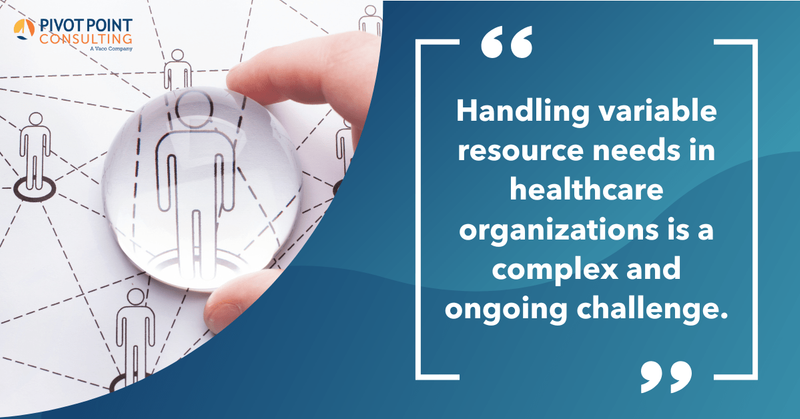
3 Essential Steps for Variable Resource Management
If your organization struggles to identify the number of resources needed at a given time, a variable resource management approach can help.
5 Keys to Unlock Metrics That Matter for Process Improvement
Process improvement can only be determined through a set list of metrics. Here are five questions to get you started.
12 Steps of an EHR Roadmap & Why It’s Essential
Optimizing and maintaining your EHR is a continuous journey. See how implementing an EHR roadmap can set you up for success with this goal.

Are You Compliant? New CURES Act Rules in Effect
A new deadline for the CURES Act has passed. Is your organization up to date on the Act's requirements? Find out today.
Implementing Epic Connect: What You Need to Know
Preparing to implement Epic Connect? Make sure you have the right information before beginning the process.